
Napoleon Bonaparte
Napoleon Bonaparte
Napoleonic-Era Notarized Tuscan Vineyard Deed - 1813
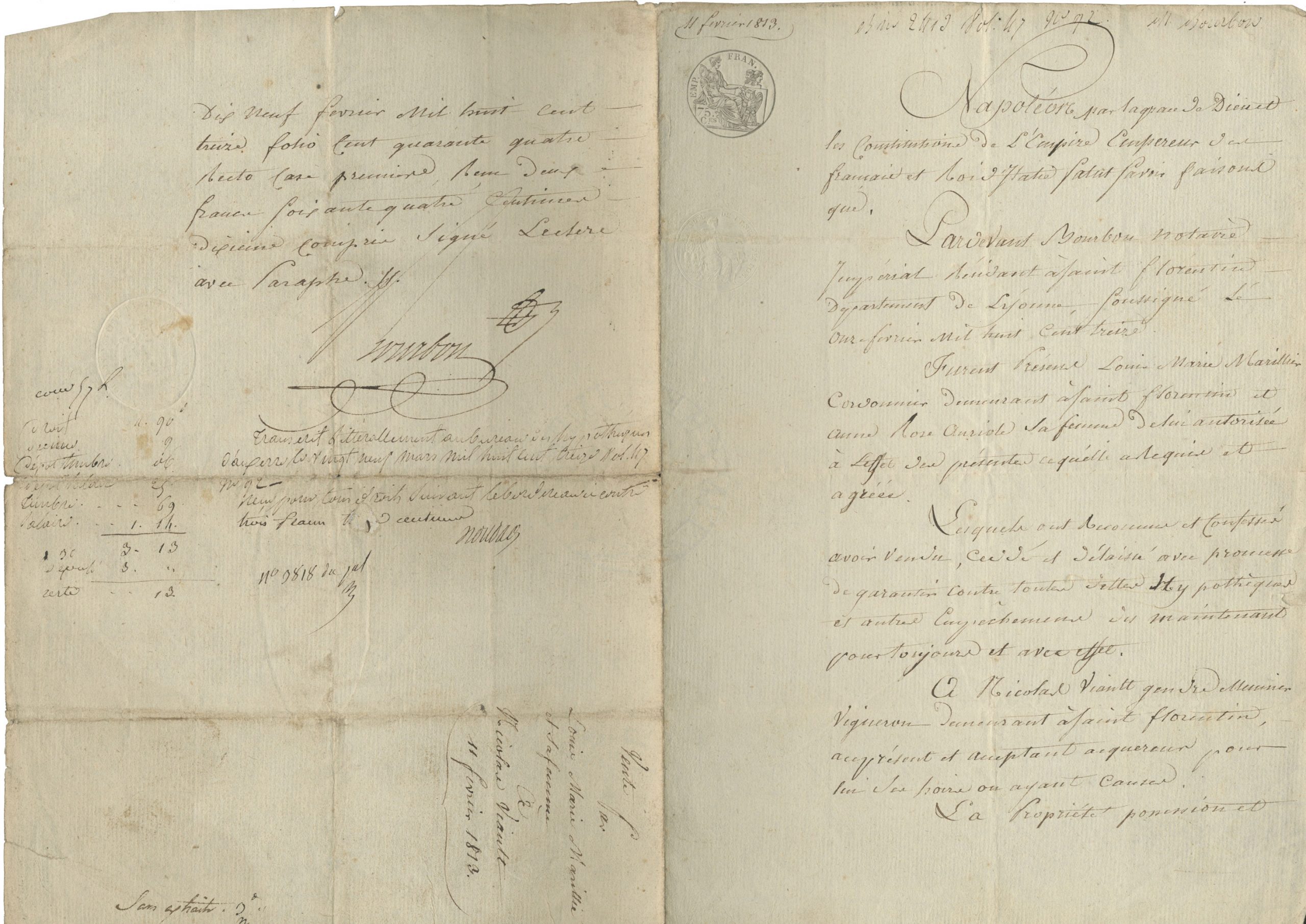
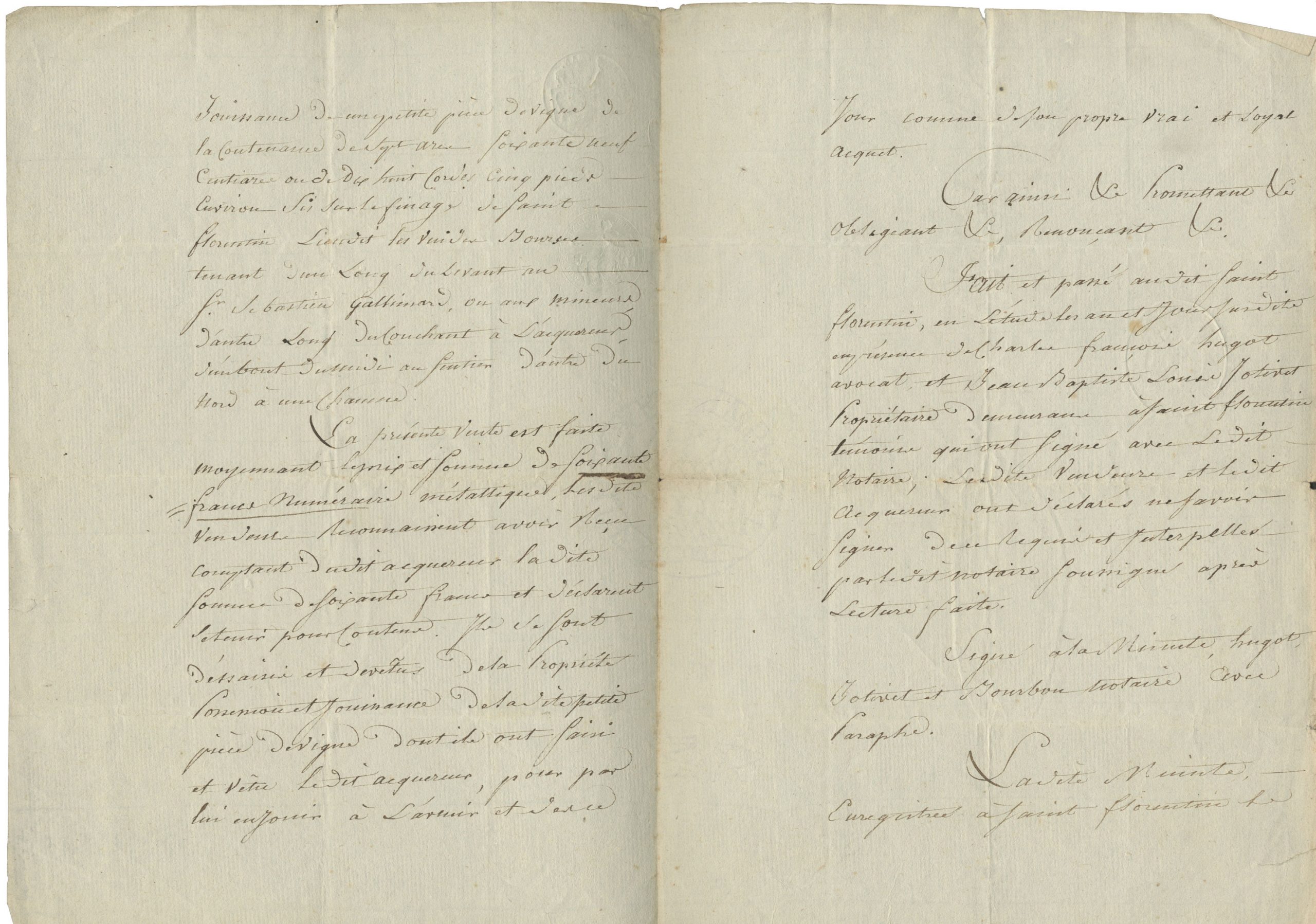
Napoleonic-Era Vineyard Deed from Tuscany
Executed Under the Authority of Napoleon Bonaparte – Florence Region, 1813
Original French Manuscript Deed, Dated February 11, 1813
This remarkable Napoleonic-era manuscript documents the sale of a vineyard parcel in Tuscany during the final years of the First French Empire. Executed before an Imperial Notary under French civil law and later registered with the authorities at Empoli, the document provides a fascinating glimpse into everyday life in occupied Italy at a pivotal moment in European history.
By 1813, Napoleon’s armies dominated much of continental Europe, and Tuscany had been reorganized under French administration. French legal procedures, taxation, registration systems, and the Napoleonic Code governed transactions throughout the region. This deed survives as a tangible artifact of that brief but transformative period.
The document records the sale of a vineyard property by Louis-Marie [surname uncertain] and his wife, Rose Auriole (or similar spelling) to Nicolas Viante, a resident of the Florence region. The property is described as a vineyard parcel with defined boundaries and neighboring lands identified in the text. The agreed purchase price was sixty francs in metallic currency, paid in full at the time of execution.
Of particular interest is the social history preserved within the document. The parties to the transaction reportedly declared that they were unable to sign their names, requiring the deed to be read aloud and executed through witnesses and the notary. Such details provide a rare glimpse into literacy levels among ordinary rural landowners in early nineteenth-century Tuscany.
The deed bears the hallmarks of Napoleonic legal drafting, including language conveying full ownership, possession, and enjoyment of the property, together with guarantees against mortgages, claims, and encumbrances. Witnesses included an attorney, Charles François Bugot, and a local property owner. The document was subsequently registered at Empoli on March 29, 1813, with official registration fees and administrative endorsements preserved on accompanying pages.
Historical Context
The year 1813 marked one of the final chapters of Napoleon’s empire. Only months after this transaction was executed, French fortunes would begin to collapse following the disastrous Russian campaign and the subsequent War of the Sixth Coalition. Within a year, Napoleon would abdicate and the political map of Europe would be dramatically redrawn.
Documents from French-administered Tuscany are considerably less common than those from metropolitan France, making this an appealing example of Napoleonic administration beyond France’s borders. The combination of vineyard ownership, rural land transfer, imperial legal authority, and surviving registration endorsements creates a vivid record of life in Tuscany during the French imperial era.
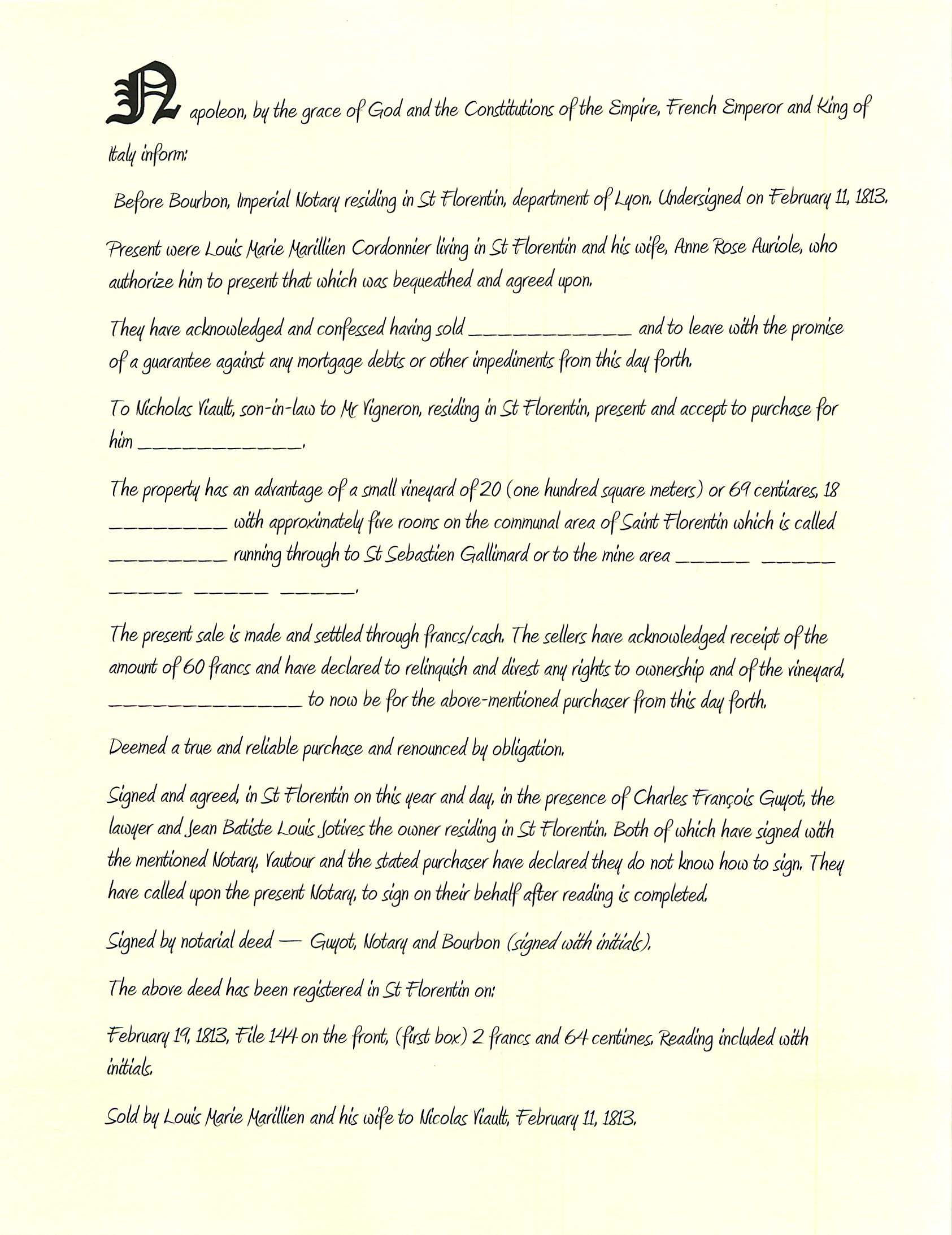
Approximate Translation Summary
- Date: February 11, 1813
- Location: Tuscany, under French Imperial administration
- Purchasers: Nicolas Viante
- Sellers: Louis-Marie [surname uncertain] and wife Rose Auriole (or similar)
- Property: Vineyard parcel with defined boundaries
- Purchase Price: 60 francs in metallic currency
- Terms: Paid in full at execution
- Legal Transfer: Full ownership, possession, and enjoyment conveyed to purchaser and heirs
- Registration: Recorded at Empoli on March 29, 1813
- Witnesses: Charles François Bugot, attorney, and a local property owner
Condition
Original manuscript on laid paper with expected age toning, folds, handling wear, registration endorsements, and period notarial markings consistent with an authentic early nineteenth-century legal document. The manuscript remains highly legible and retains its historical integrity.